
What Is a Siddur?

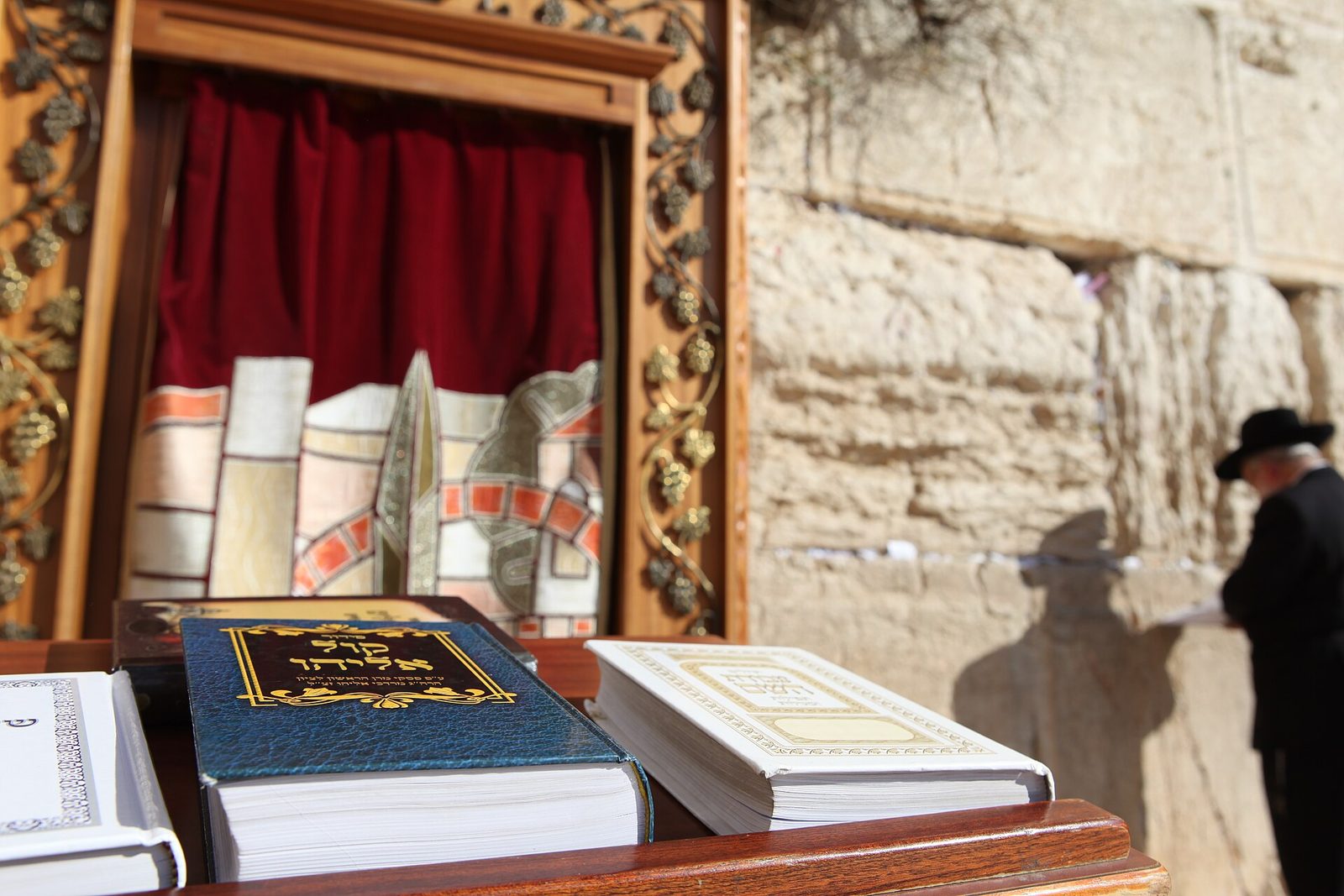
What a Siddur Is
The siddur is the traditional Jewish prayer book.
The word "siddur" means "order," because in the prayer book all the prayers are set out in their proper, fixed order.
A standard siddur usually contains the text of the three daily prayers:
- Shacharit (the morning prayer)
- Mincha (the afternoon prayer)
- Maariv (the evening prayer).
The siddur also includes the prayers for Shabbat, Rosh Chodesh (the New Moon), and the main prayers for the holidays of Pesach, Shavuot, and Sukkot. In a siddur you can usually also find the basic blessings, prayers for various occasions in life, and other useful information.
The prayers for Rosh Hashanah, Yom Kippur, and the festivals are usually printed in separate books called a "machzor" (cycle).
The History of the Siddur
The oldest prayer book known to us, and the foundation of modern siddurim, is the Siddur of Rav Amram Gaon, head of the yeshiva of Sura in Babylonia, roughly 1,100 years ago.
For a long time the Siddur of Rav Amram Gaon existed only in manuscript; it was first printed in 1865 in Warsaw.
Other famous siddurim. Rav Saadia Gaon, head of the yeshiva of Sura, published his own prayer book less than 100 years after the Siddur of Rav Amram Gaon appeared — for the Jewish communities in Arab lands, with explanations and instructions in Arabic.
The Rambam, in his famous code of Jewish law, the Yad HaChazakah, also set out the order of prayers for the whole year and analyzed the laws of prayer in detail.
Among the well-known prayer books, the Machzor Vitry deserves mention: it was compiled by Rabbi Simcha of Vitry, a disciple of the great Rashi, in 1208. This siddur is often cited in halachic literature.
Printed siddurim. The first printed prayer book was the Siddur Romi (the siddur of the Italian community). It appeared in 1486 in Italy. The first Nusach Ashkenaz siddur was printed in Prague in 1513. The first Nusach Sefard siddur was printed in Venice in 1524.

Nusach
Nusach means "text" or "form" ("version"); sometimes the word is also used to mean "custom" or "rite." Although the main texts of the prayers are essentially unchanged, there are certain differences between the nuschaot of the various communities. A siddur indicates its nusach — that is, which community's customs the text of its prayers follows.
The main versions are:
- Nusach Edot HaMizrach, for Jews from Sephardic communities,
- Nusach Ashkenaz, for Jews from Ashkenazi communities,
- Nusach Sefard (Polin), for Chassidic communities,
- Nusach Ari, and so on.
It should be understood that for all the differences between prayer books, the main body of the prayers remains the same; the differences in the wording and structure of the prayers are very small. There are also certain differences in the order of the prayers; some nuschaot include liturgical poems (piyutim) that others lack.
Staying Faithful to Your Ancestors' Nusach
How binding is it to follow the nusach of your ancestors, and may one switch to a different nusach?
Mishlei (1:8) says: "...do not forsake the teaching of your mother," which, according to the Talmud, means a general prohibition against departing from the customs of one's forefathers.
When it comes to the text and order of the prayers, constancy matters for one more reason, as the Magen Avraham, a commentator on the Shulchan Aruch (Orach Chaim 68), writes in the name of Rabbi Chaim Vital (in the introduction to his book "Pri Etz Chaim").
The author relates that he asked his teacher, the great kabbalist the Ari, a question that interests many: where did the differences in the texts of the prayers come from, given that they were established by the Men of the Great Assembly? The Arizal's answer was entirely unexpected. Rather than looking for reasons in the circumstances of Jewish communal life, he revealed to his disciple that in Heaven there are 12 gates through which prayers pass. Each of the 12 tribes of Israel has its own gate assigned to it (chapter 48 of the book of the prophet Yechezkel contains a description of the Third Temple: it is to have 12 gates).
Why does each tribe have its own gate? Every tribe has its own unique "soul root," and the order and text of its prayers must correspond to it. It follows that the prayers of the tribes of Israel differ from one another, and each prayer has its own gate — that is, its own individual path of influence on the higher worlds. An attempt to bring a "foreign" nusach of prayer through one's own gate will come to nothing (like trying to get into your own apartment using the neighbors' key). "Therefore," the Ari concluded his teaching, "everyone must strictly keep to the prayer customs of their fathers."
In other words, no nusach can be given preference over another. Every nusach has its own ancient sources. The main thing is to pray with devotion, love, and reverence. At the same time, it is important for a person to keep to the nusach of their ancestors and not change it.
In certain situations — for example, when a woman marries a man who prays according to a different nusach — she usually changes her nusach to her husband's. If a baal teshuvah does not know which nusach his ancestors used, he usually keeps to the nusach of the institution where he was educated. If questions arise, it is best to discuss them with a knowledgeable rabbi.
The Structure of the Prayers
Whatever the nusach, the basic structure of the prayers stays the same.
The morning prayer, Shacharit:
- The Morning Blessings
- Pesukei deZimra (specially selected chapters of Tehillim — Psalms — and passages from the Tanach)
- Kriat Shema with its blessings
- Shemoneh Esrei ("Eighteen Blessings"; also called the "Amidah" — "standing," since it is recited standing).
- Aleinu Leshabe'ach ("It is upon us to praise...")
The afternoon prayer, Mincha:
- Ashrei ("Happy are those who dwell in Your house...")
- Shemoneh Esrei
- Aleinu Leshabe'ach
The evening prayer, Maariv (Arvit):
- The blessings before Kriat Shema
- Kriat Shema
- The blessings after Kriat Shema
- Shemoneh Esrei
- Aleinu Leshabe'ach.
How to Handle a Siddur
The siddur is one of the holy books, since the Names of G-d are printed in it. For this reason there are certain rules for handling a siddur:
- It is forbidden to put a siddur on the floor or on the ground. However, if the books are inside some other object — a box, a bag, or a package, for instance — they may be placed on the ground.
- It is forbidden to sit on a chair or bench on which a siddur is lying or standing. However, if the bench is divided into separate seats, there is no prohibition.
- It is permitted to place a siddur on your lap, but it is forbidden to lean on it while it lies there, unless doing so helps in Torah study.
- It is forbidden to place a siddur "face down." If it is open, it is also forbidden to lay it down this way, even when this is done so as not to leave it open.
- If you see that a siddur has fallen to the ground, you must pick it up at once. It is customary to kiss the book when doing so.
- We also show respect for the siddur by returning it to its place when the prayer is over.
Comments