
Sukkot: The Shade of Faith. A Kabbalistic Look at the Sukkah and the Four Species

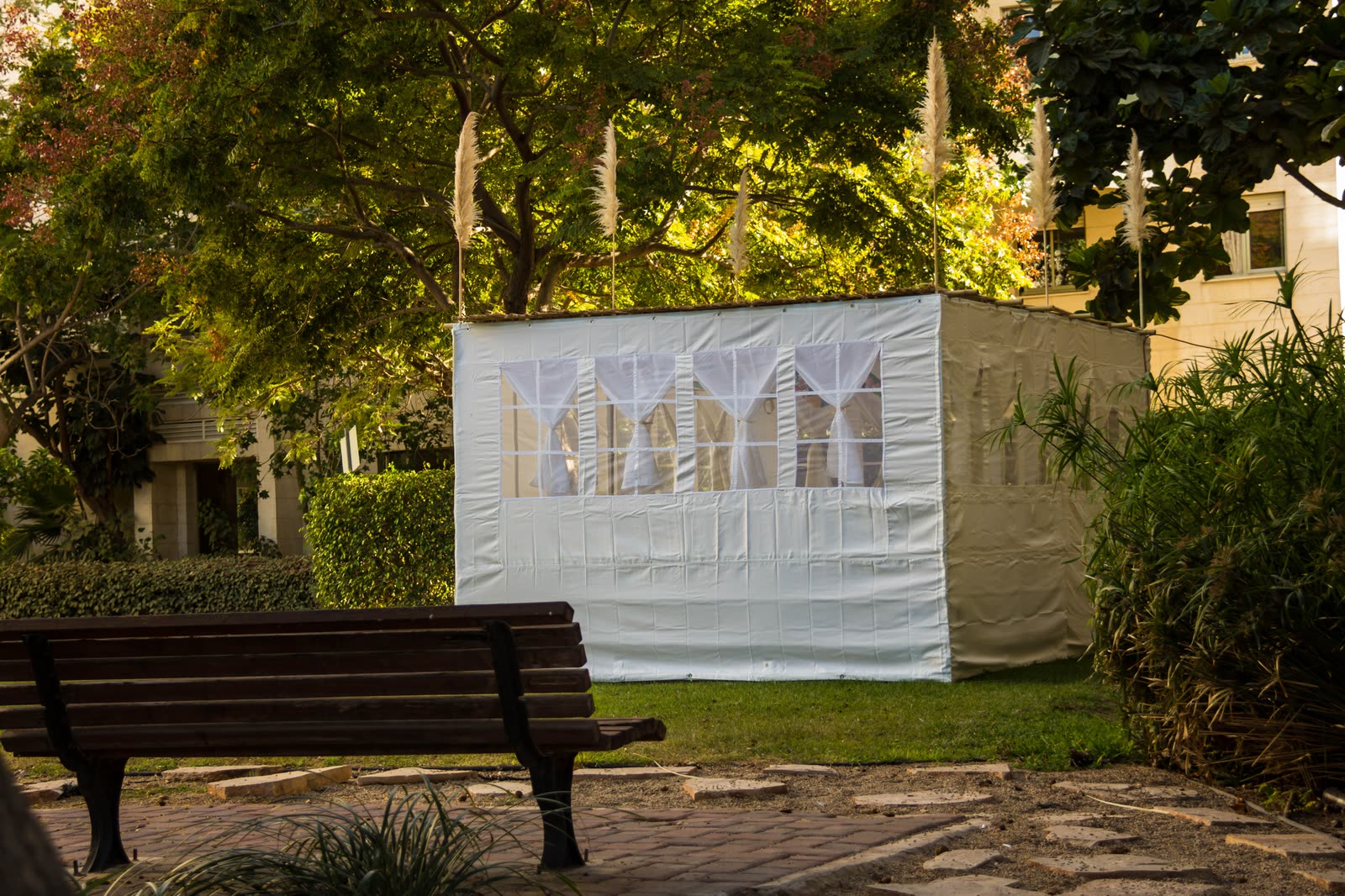
The Shade of Faith
The holiday that comes after Yom Kippur — Sukkot — opens the doors of joy. Sukkot is called "the time of our rejoicing," but this is not simply a good mood after the hard days of teshuvah.
Kabbalah calls the sukkah "the shade of faith" — tzila d'meheimnuta. We sit not merely beneath a roof of branches, but beneath the "clouds of glory," beneath the enveloping light of the Shechinah — the Divine presence — which surrounds, protects, and heals. This surrounding light — or makif — does not enter inside as knowledge or feeling; it embraces us whole, like an embrace in which the heart grows calm and opens up.
And this embrace can quite literally be "read." The numerical value of the word "sukkah" is 91 — the sum of the numerical values of the Names, the hidden four-letter Name and the revealed Master of the world (26 + 65). We sit inside their unity, in the space where Heaven and earth are in accord. The roof — the schach — is made of what grew from the earth and has been cut off from the soil. It is like a screen, a masach, gently filtering light that is too direct so that it becomes fit for life. Through this "shade," the light does not blind but sustains. That is why in the sukkah we eat, talk, sing, and sleep: ordinary life becomes a sacred act.
Guests in the Sukkah — the USHPIZIN
On each of the seven days of Sukkot we invite the ushpizin — the "guests," the seven shepherds of Israel, each with his own shade of light:
- the kindness of Avraham
- the courage of Yitzchak
- the harmony of Yaakov
- the steadfastness of Moshe
- the peacemaking of Aharon
- the righteousness of Yosef
- the humility of David
In some homes the ushpizot are also remembered — the Matriarchs, through whom the feminine side of the Divine presence shines.
Thus the house beneath the sky becomes a "small temple," into which enter the qualities of the seven lower sefirot, teaching us to live by them.

The Four Species: A Union of Inner Forces
The lulav — a palm frond; the etrog — a citron; myrtle branches and willows — four species that we take together and accompany with movements toward all the directions of the world. In the language of Kabbalah, this is not simply a bouquet from nature but a "portrait" of the soul gathered in our palms, and its rectification.
The lulav is the straight axis of the spine, and on the spiritual map it corresponds to the sefirah of Yesod, the channel of connection and faithfulness. Three myrtles are bound to it — corresponding to the three sefirot of Chesed, Gevurah, and Tiferet, the three "basic" qualities of the heart: to give, to restrain, to harmonize. On either side are two willows, like the sefirot of Netzach and Hod, steadfastness and grateful beauty. Together they form the "body" of Zeir Anpin — the six emotional sefirot, the vertical line from love to faithfulness. The etrog, meanwhile — a separate fruit of rounded fullness — is Malchut, the world that receives, the field where everything grows; in the image of the body, it is the heart and the womb, the vessel of life.
When we join the etrog to the lulav, we bring about their spiritual marriage: Zeir Anpin and Malchut meet, and the transmission of light becomes possible. That is why the Sages have a subtle detail: while the etrog is separate, it is one world; when it touches the lulav, it is another. We are, as it were, assembling ourselves from our parts — thought, feeling, will — and bringing all of it to the heart, so that the light truly "enters" and becomes life.
There is another image, too, that the Kabbalists love: the four species are the organs of speech and perception.
- The etrog — the heart
- the lulav — the spine
- the myrtles — the eyes
- the willows — the lips
When we wave the lulav, we direct our prayer to the four directions of the world and up and down, affirming: the whole world is a vessel for blessing, and so are my eyes, my words, and my heart. Inwardly, this movement is not merely a gesture but a tracing of the Divine Names in space, drawing light toward whatever needs to be brought back to life.
The Joy of the Water
Sukkot is also about water. In the Temple, a water libation was performed, and nighttime celebrations of the water-drawing were held — Simchat Beit HaShoeva.
The Zohar says that Ruach HaKodesh, the Holy Spirit of inspiration, descended into this joy. In the language of Kabbalah, water is chessed — generosity that pours out without limit. After the dry, austere Yom Kippur, the world seems to begin flowing again, and we learn to rejoice simply because life flows, and not because everything is under control.
What happens to the soul in these days? In plain language — we learn to trust.
The temporary house beneath the branches says: steadfastness comes not from walls but from presence.
The four species in our hands teach: wholeness is when all the parts have come to an agreement, when strength supports gentleness, striving honors beauty, and the heart receives the light.
And that is why these seven days are so important: in them we practice being whole — and this, in the words of Kabbalah, is the very beginning of a blessed year.
Comments